

 rastriyakhabar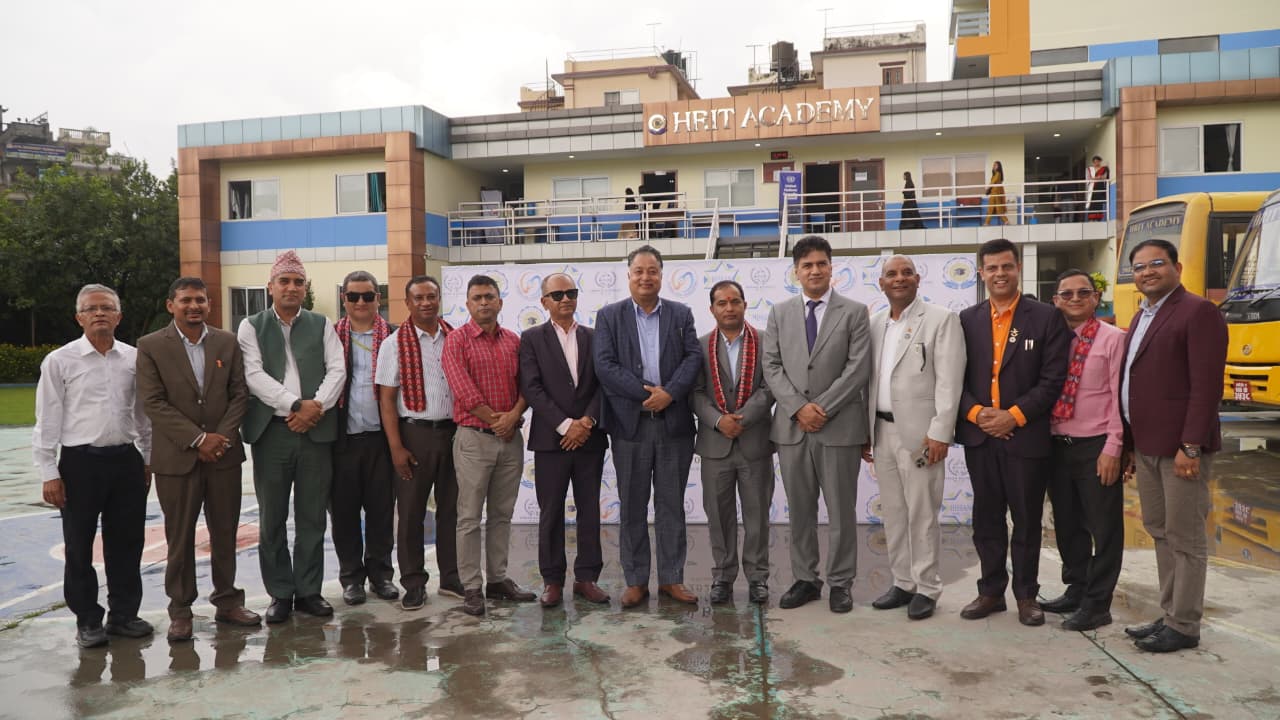
KATHMANDU. More than 200 students from 74 colleges across Bagmati Province have gathered in Kathmandu for HISSAN Bagmati MUN–2026: Dialogue, Diplomacy & Impact, a three-day Model United Nations conference aimed at developing leadership, diplomacy, critical thinking and communication skills among young people.
The conference began on Friday at Hrit Academy in Basundhara and will continue until August 23. It is jointly organised by HISSAN Bagmati Province and Global Help Foundation, with College Readers as the media partner.
Model United Nations (MUN) is an academic simulation of the United Nations in which students assume the roles of delegates representing different countries. Participants research international issues, present their assigned countries’ positions, engage in formal debates, negotiate with other delegates and work towards common resolutions.
The programme is being held under the chairmanship of HISSAN Bagmati Province President Raj Kumar Acharya, with Vice-President Ananda Kumar Yadav serving as the programme coordinator. HISSAN Bagmati Province Secretary Madan Subedi conducted the opening session.
Former ambassador Sanil Nepal attended the inaugural session as the chief guest, while HISSAN Central Committee General Secretary Ram Hari Silwal was the special guest. HISSAN Vice-President Dr Rishi Tiwari, Vice-President Bishnu Raj Poudel, Secretary Bhawani Prasad Poudel, Treasurer Shiva Adhikari, education-sector representatives and principals of participating colleges were also present.
Welcoming the participants, Yadav said the primary objective of the programme was to prepare students for future leadership responsibilities. He stressed that academic and textbook knowledge alone is not sufficient in an increasingly competitive and interconnected world.
“Today’s students will become tomorrow’s policymakers, administrators, diplomats, entrepreneurs, teachers and social leaders,” Yadav said. “They should therefore have opportunities to practise leadership before they are required to shoulder such responsibilities.”
He said MUN helps students develop the ability to express ideas clearly, listen to opposing views, defend their positions with evidence and reach conclusions through constructive dialogue. The programme also aims to strengthen confidence, communication, judgement and teamwork.
Chief guest Nepal described MUN as an effective platform for developing a practical understanding of international affairs. He said global problems increasingly require dialogue, negotiation and diplomacy rather than confrontation.
“Many global problems cannot be resolved through the use of force; they require dialogue, negotiation and diplomacy,” Nepal said. He encouraged students to listen to people with different perspectives and present their own positions through reasoned arguments.
HISSAN General Secretary Silwal said education should not be limited to examinations and certificates. According to him, education should also promote leadership, creativity, critical thinking, social responsibility and overall personality development.
Programme Chair Acharya said the conference theme—Dialogue, Diplomacy & Impact—reflects three essential qualities young people need to develop. He said the programme seeks to connect theoretical knowledge gained in classrooms with practical experience.
During the three-day conference, students will participate as delegates of different countries in simulated UN committees. They will discuss international relations, human rights, peace and security, policymaking, global challenges and multilateral cooperation.
Participants will present national positions, engage in debates, negotiate with other delegations and formulate common solutions. The activities are expected to enhance leadership, public speaking, critical thinking, negotiation, teamwork, decision-making and professional communication skills.
The conference also provides students with opportunities to interact with peers from different colleges, build networks and gain confidence in formal settings. Organisers said the programme would help participants become more informed, responsible and globally aware citizens while preparing them for future leadership roles.




प्रतिक्रिया